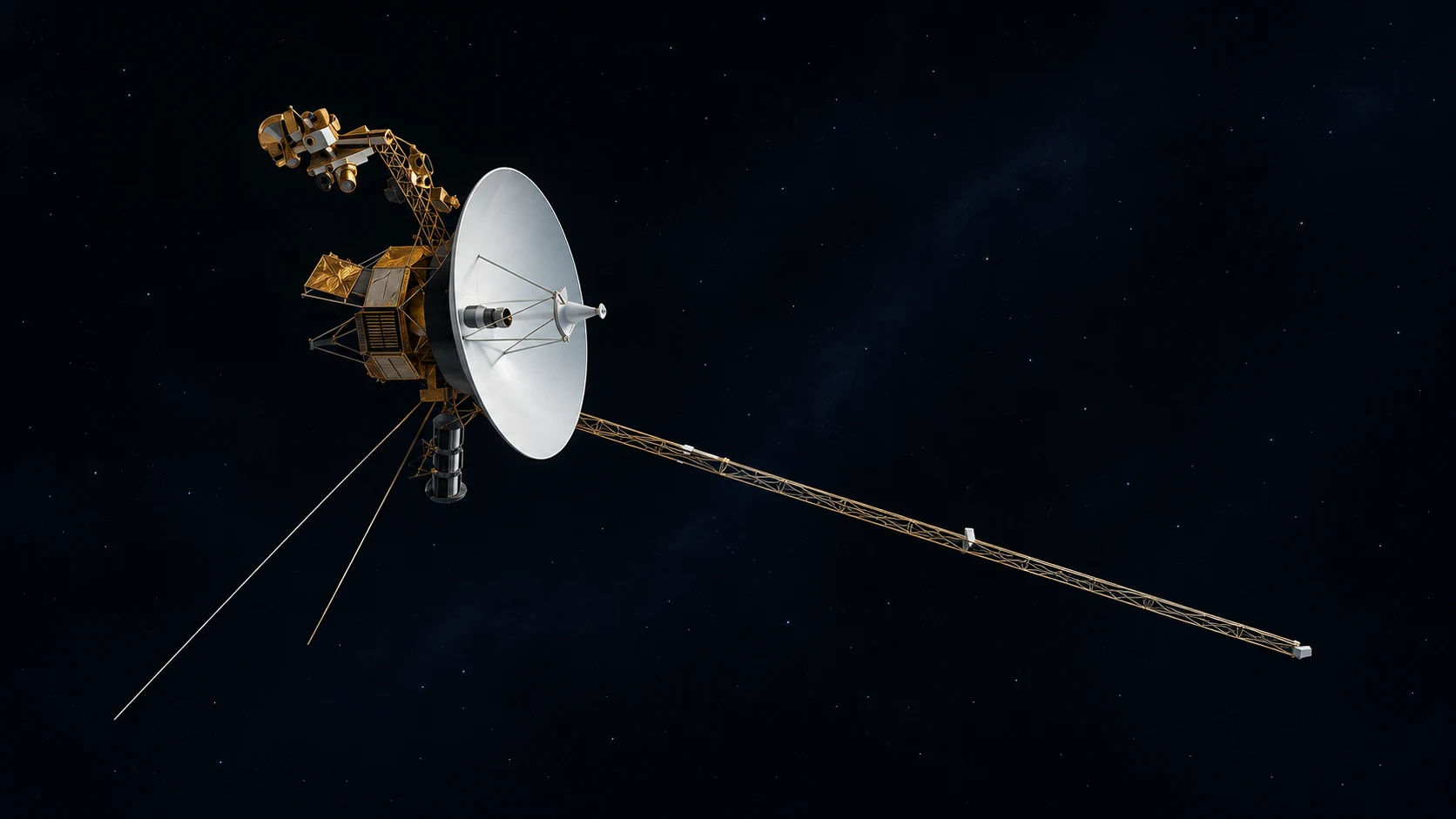
Voyager 1 reached one light-day from Earth on November 18, about 25.9 billion km away. A radio signal takes about 24 hours each way.
Key points
- NASA’s trajectory calculations put Voyager 1 a light-day from Earth, a first for a human-made object.
- One light-day is about 173 times the average Earth–Sun distance. Radio signals take about 48 hours to make the round trip.
- NASA’s Deep Space Network can still receive the carrier signal. Science and engineering telemetry has stopped, and the cause is under investigation.
At 5:16:07 a.m. U.S. Eastern Standard Time (EST) on November 18, 2026, Voyager 1 reached one light-day from Earth. NASA’s trajectory model, based on years of tracking, makes it the first human-made object to reach that distance. The probe has been in flight for more than 49 years since its launch in 1977.
Earth sends a command. A reply can come two days later
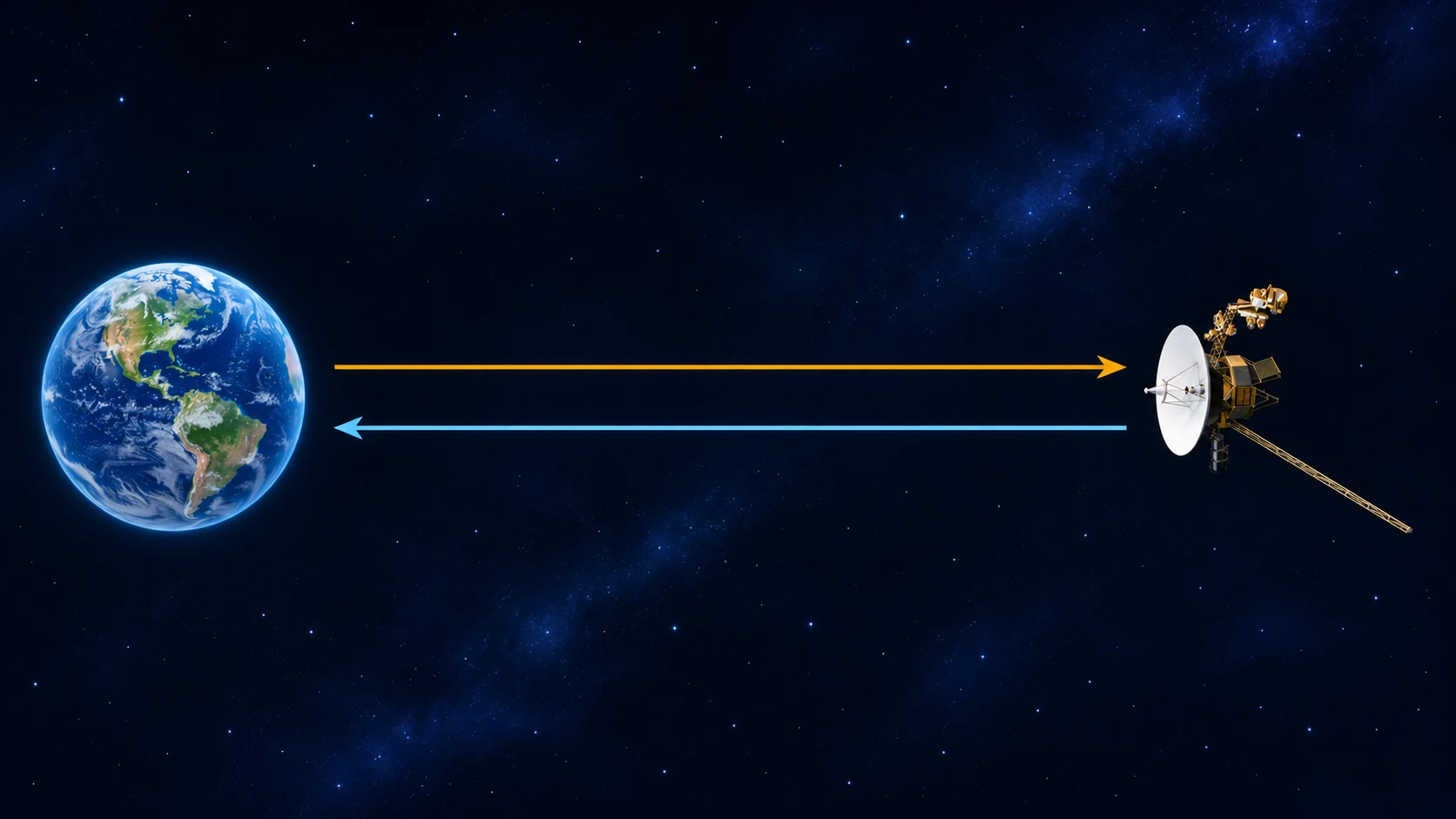
A light-day is the distance light travels in a vacuum in 24 hours, about 25.9 billion kilometres or 173 times the average Earth–Sun distance. Radio waves travel at the speed of light too. A command from Earth takes about a day to reach the probe. Even an immediate reply takes another day to get back.
That delay adds up during troubleshooting. If engineers need to see the result of a test before deciding what to send next, the two transmissions alone take about 48 hours per round.
The carrier is still coming through
NASA says the mission team learned on November 14 that its Deep Space Network antenna in Canberra, Australia, could still lock onto Voyager 1’s radio carrier but was receiving no science or engineering data. The carrier shows that the probe’s antenna is still pointing toward Earth and that its transmission equipment is working.
Engineers are investigating whether the fault involves the onboard computer that collects and packages telemetry. Voyager 1 continues along its known trajectory. NASA calculated when it reached one light-day and plans to confirm the milestone using the carrier received on Earth.
From Jupiter and Saturn to interstellar space
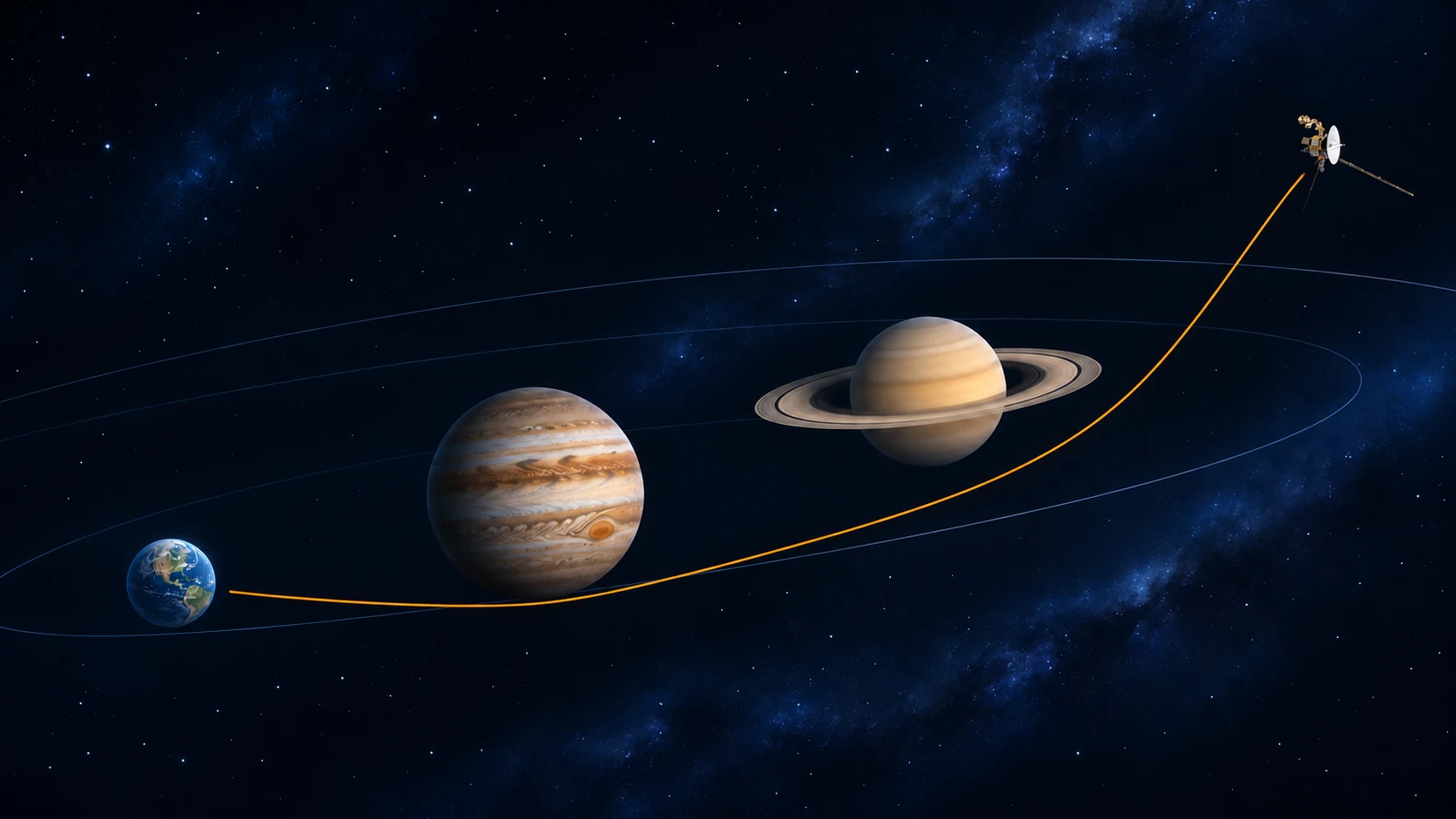
Voyager 1 flew past Jupiter in 1979 and Saturn the following year. It then headed outward above the plane of the planets’ orbits. In 2012 it crossed the heliopause and became the first spacecraft to enter interstellar space.
The heliosphere is the region carved out by the solar wind in the surrounding interstellar medium. After crossing its boundary, Voyager 1 could measure the interstellar environment directly, including magnetic fields and plasma waves. A voyage to the giant planets became a decades-long mission to study the space between stars.