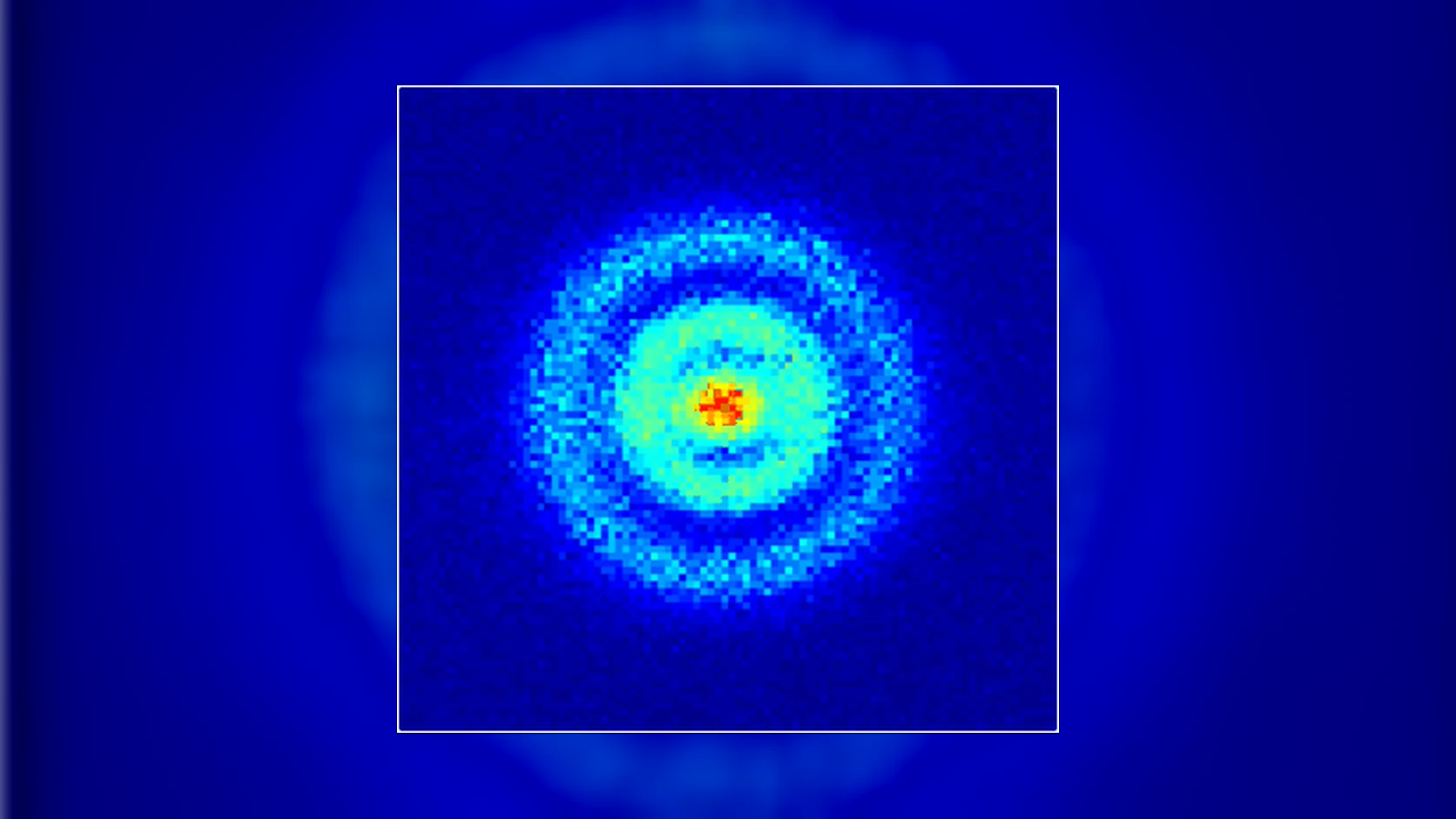
A 2013 experiment in Physical Review Letters showed that the nodes of hydrogen Stark-state wave functions in a dc electric field can be projected onto a macroscopic detector by photoionization microscopy. It did not photograph an electron moving along an orbit; it accumulated many identically prepared ionization events into a probability distribution matching quantum theory.
Key points
- The first-hand source is a 2013 Physical Review Letters paper by A. S. Stodolna and eight coauthors.
- The team used an 808 V/cm dc electric field, ultraviolet lasers and a two-dimensional detector to record where electrons arrived after hydrogen atoms were photoionized.
- Images of four quasi-bound Stark states showed 0 to 3 dark nodes, matching the corresponding parabolic quantum number n1.
- The images show electron probability distributions and interference nodes, not a real-time track of an electron orbiting a nucleus.
- The experiment confirmed a photoionization-microscopy prediction made about three decades earlier and offered a way to connect a quantum wave function with a macroscopic image.
With one proton and one electron, hydrogen is often treated as quantum mechanics at its cleanest. In 2013, a European and U.S. research team pushed that textbook atom into a more visual role: instead of drawing an imagined electron orbit, they projected the nodal structure of an excited hydrogen wave function into an interference pattern measurable on a two-dimensional detector.
From One Atom to One Image
The experiment used photoionization microscopy. The team first produced a beam of atomic hydrogen from hydrogen sulfide molecules, then used a 243 nm laser to excite hydrogen into a mixture of n=2 s and p states. A narrow-band tunable laser at 365 to 367 nm then ionized the atoms. After leaving the atom, each electron travelled under the combined influence of the applied electric field and the proton’s Coulomb field toward a detector made from a microchannel plate, a phosphor screen and a CCD camera.
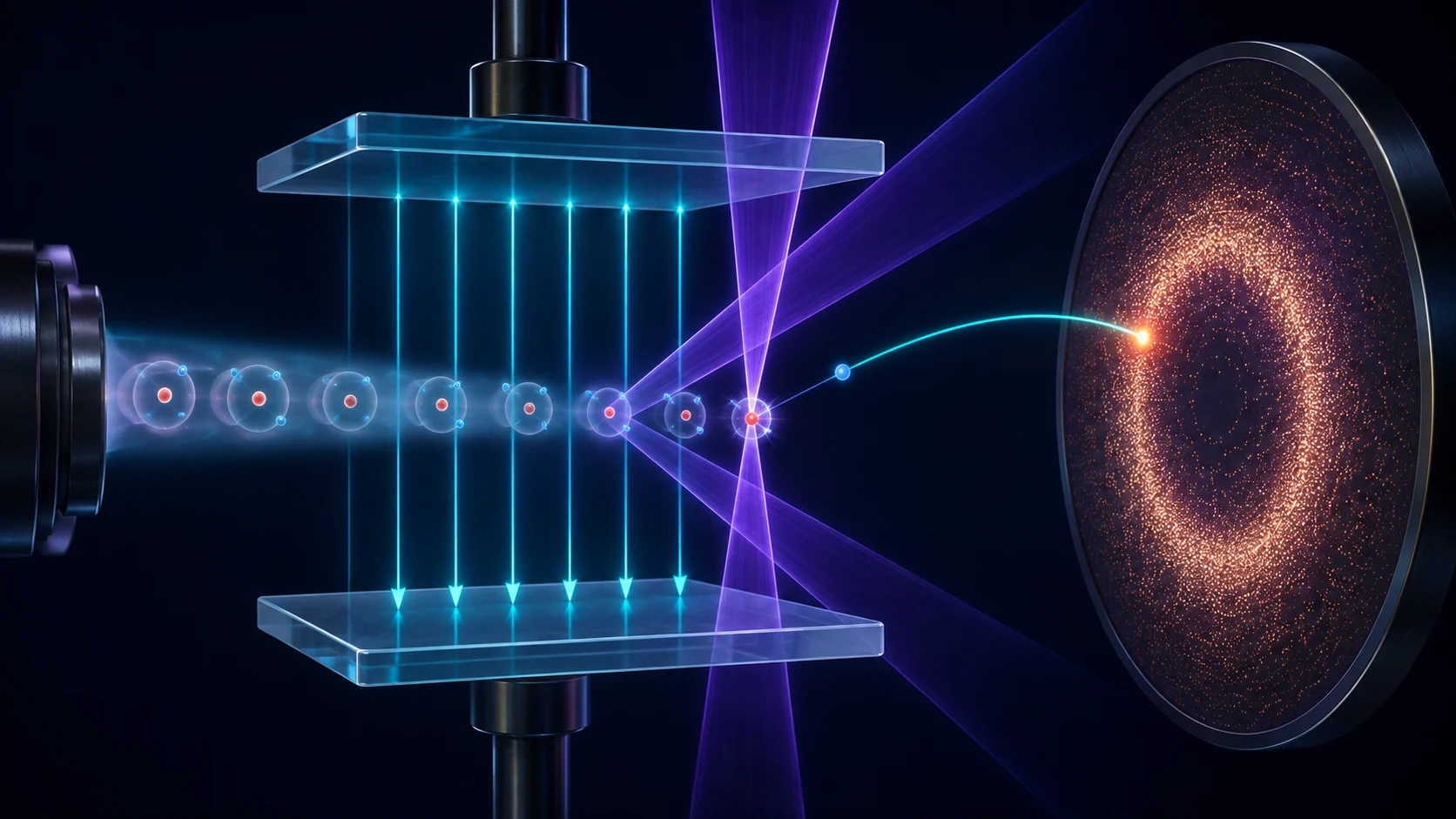
The key is that, when hydrogen sits in a dc electric field, the Stark Hamiltonian can be separated exactly in parabolic coordinates. The paper explains that the microscopic wave function near the atom along the xi coordinate and the continuum projection measured at macroscopic distance preserve the same nodal structure. In other words, the rings of light and dark on the detector are not an ordinary photograph; they are the geometry of an electron wave function magnified by the experimental conditions.
The Node Count Matches the Quantum Number
The researchers measured four quasi-bound Stark states with quantum numbers (n1,n2,m) = (0,29,0), (1,28,0), (2,27,0) and (3,26,0). The central experimental images in the paper show the number of dark nodes increasing from 0 to 3 as n1 increases; the accompanying time-dependent Schrödinger-equation calculations and radial probability distributions also agree closely with the measurements.
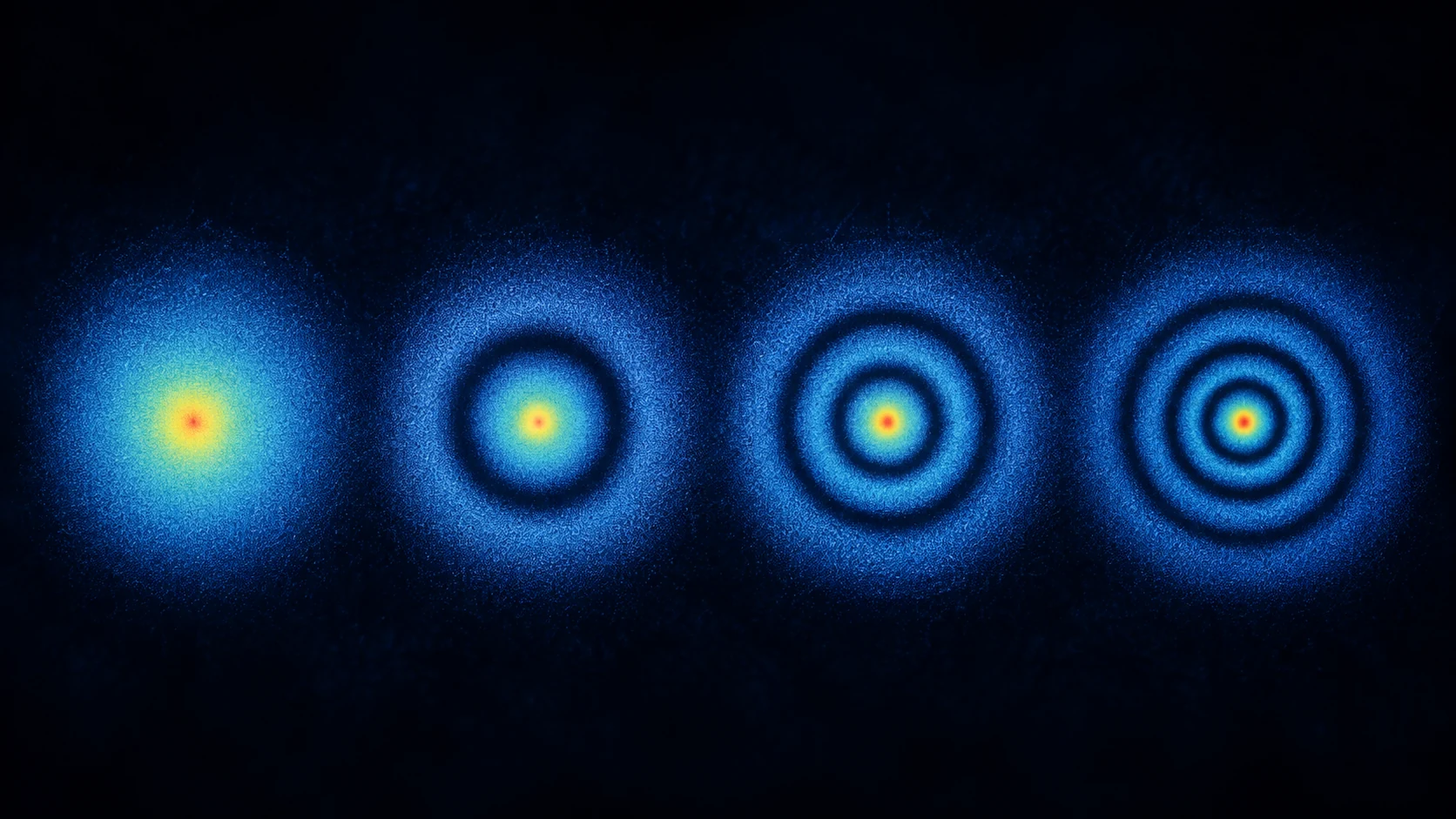
That result confirmed a prediction made more than thirty years earlier by Demkov and colleagues: if hydrogen is ionized through a quasi-bound Stark state, the photoionization-microscopy pattern on the detector should directly reveal the nodal signature of that state. The paper also notes that, under resonant excitation, the outer rings can extend into regions that classical paths would have difficulty reaching, reflecting the role of tunnelling in this system.
This Is Not an Electron Orbit
Hydrogen is often drawn like a tiny planetary system, but that image belongs to an earlier historical stage. Quantum mechanics describes a wave function, and the square of the wave function gives the probability of measuring an electron at a given place. Each run of the experiment sends one electron to one position on the detector; the full pattern emerges only after many identically prepared atoms are measured again and again.
The most important part of the image, then, is that it turns an invisible probability into a testable distribution. It does not let anyone follow one electron along a fixed path, and it does not remove the fact that measurement changes a quantum state. It shows that, in the right system and coordinate conditions, the nodes of a microscopic wave function can be preserved in a far-away detector projection.
Why Hydrogen Works So Cleanly
Hydrogen is powerful precisely because it is simple. With only one electron, it has no complicated electron-electron interactions; in a dc electric field, its Stark problem can also be separated in parabolic coordinates. The paper notes that other atoms, including xenon and lithium, had been studied with related methods, but quantum defects in non-hydrogen systems couple the states together and make the resonant patterns less clean.
What It Has to Do With Spectra and the Universe
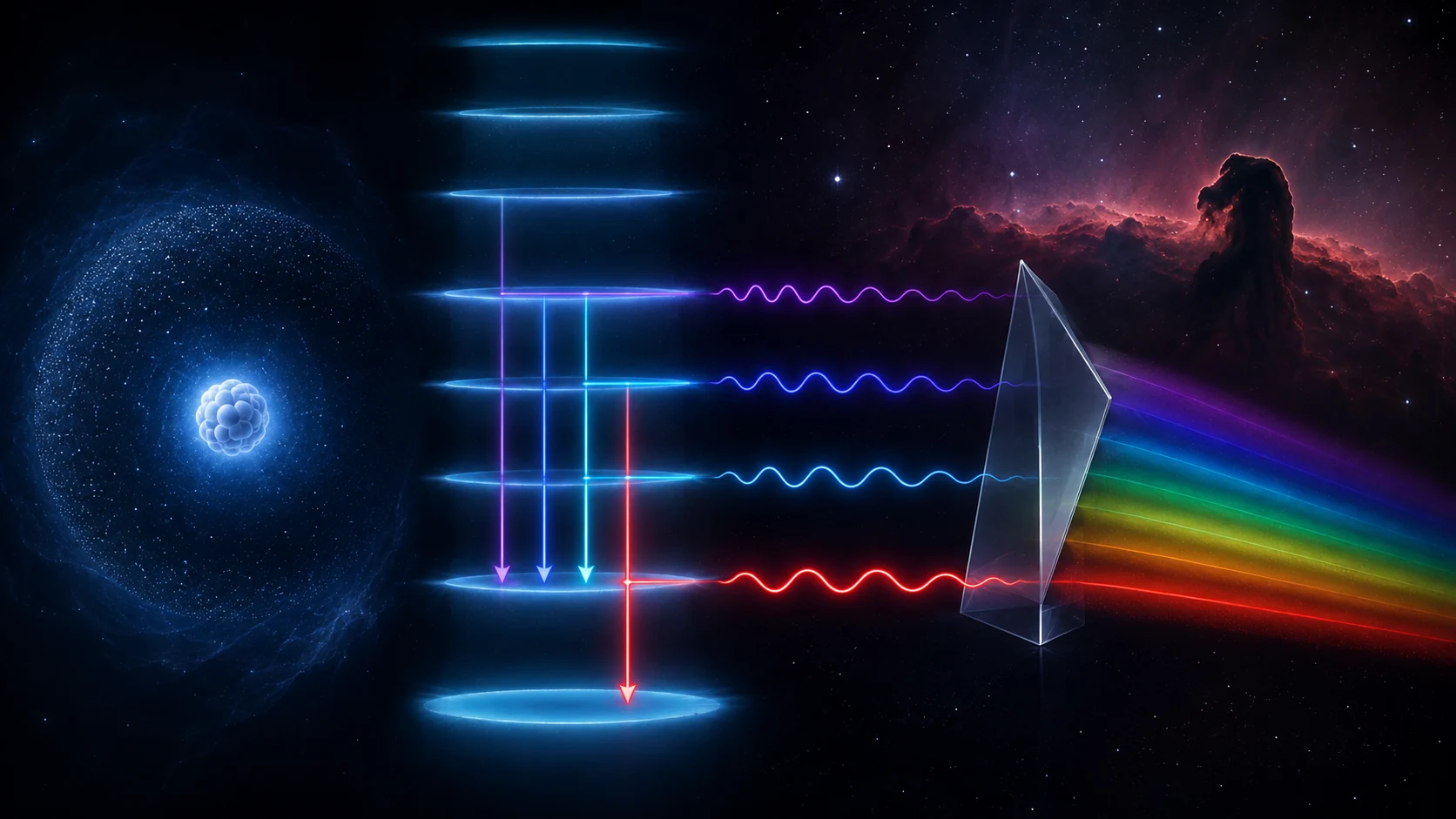
The same hydrogen atom is also one of the most common characters in astronomical spectra. Because hydrogen energy levels are quantized, its electron can absorb or emit only photons with specific energies. Visible transitions ending at the n=2 level form the Balmer series, including the H-alpha line near 656 nm. Hydrogen spectra from nebulae, stellar chromospheres and galactic gas help astronomers read temperature, motion and physical state.
The UTK teaching page links these ideas into a historical line: Thomson’s electron, Rutherford’s nucleus, Bohr’s quantized orbits and then the probability distributions of modern quantum mechanics. The value of the 2013 experiment is that it adds a visible waypoint to that line. Hydrogen is no longer only equations and energy tables on a board; with a carefully designed experiment, the shape of its quantum wave function can leave a trace.