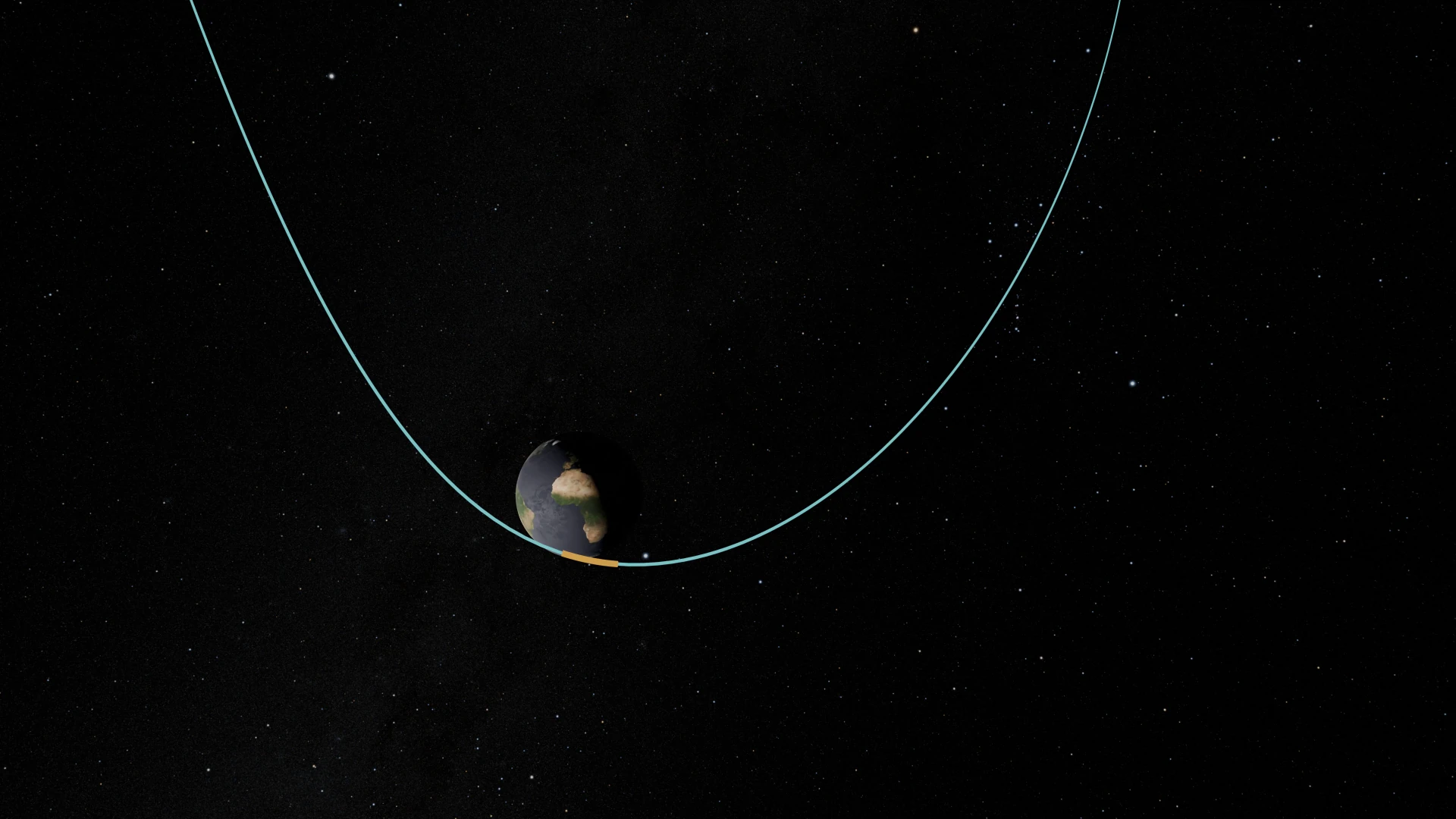
NASA’s ESCAPADE spacecraft flew past Earth on November 7 and 9, using gravity and their engines to head for Mars. They are due to enter orbit in September 2027 to study how the solar wind drives atmospheric loss.
Key points
- Blue and Gold completed powered Earth flybys on November 7 and 9 and are now on course for Mars.
- The probes looped near Sun–Earth L2 while the planets moved into position for the transfer, then returned to Earth to fire their engines.
- The pair is due to enter Mars orbit in September 2027. Coordinated measurements will probe how the solar wind drives atmospheric escape.
After nearly a year looping near Earth, NASA’s twin ESCAPADE probes are on their way to Mars. The identical spacecraft, Blue and Gold, flew past Earth on November 7 and 9, 2026, respectively. Each fired its engine during the encounter, combining thrust with Earth’s gravity to enter a Mars-bound trajectory.
According to NASA’s rounded figures, Blue made its closest approach at about 5 a.m. U.S. Eastern Standard Time (EST) on November 7, about 1,000 miles (1,600 kilometers) above Earth’s surface. Gold passed about 650 miles (1,050 kilometers) above the surface around 6 a.m. EST on November 9. Each fired its engine continuously for about nine minutes. These were NASA’s first powered Earth flybys to send spacecraft to Mars.
A loop near Sun–Earth L2
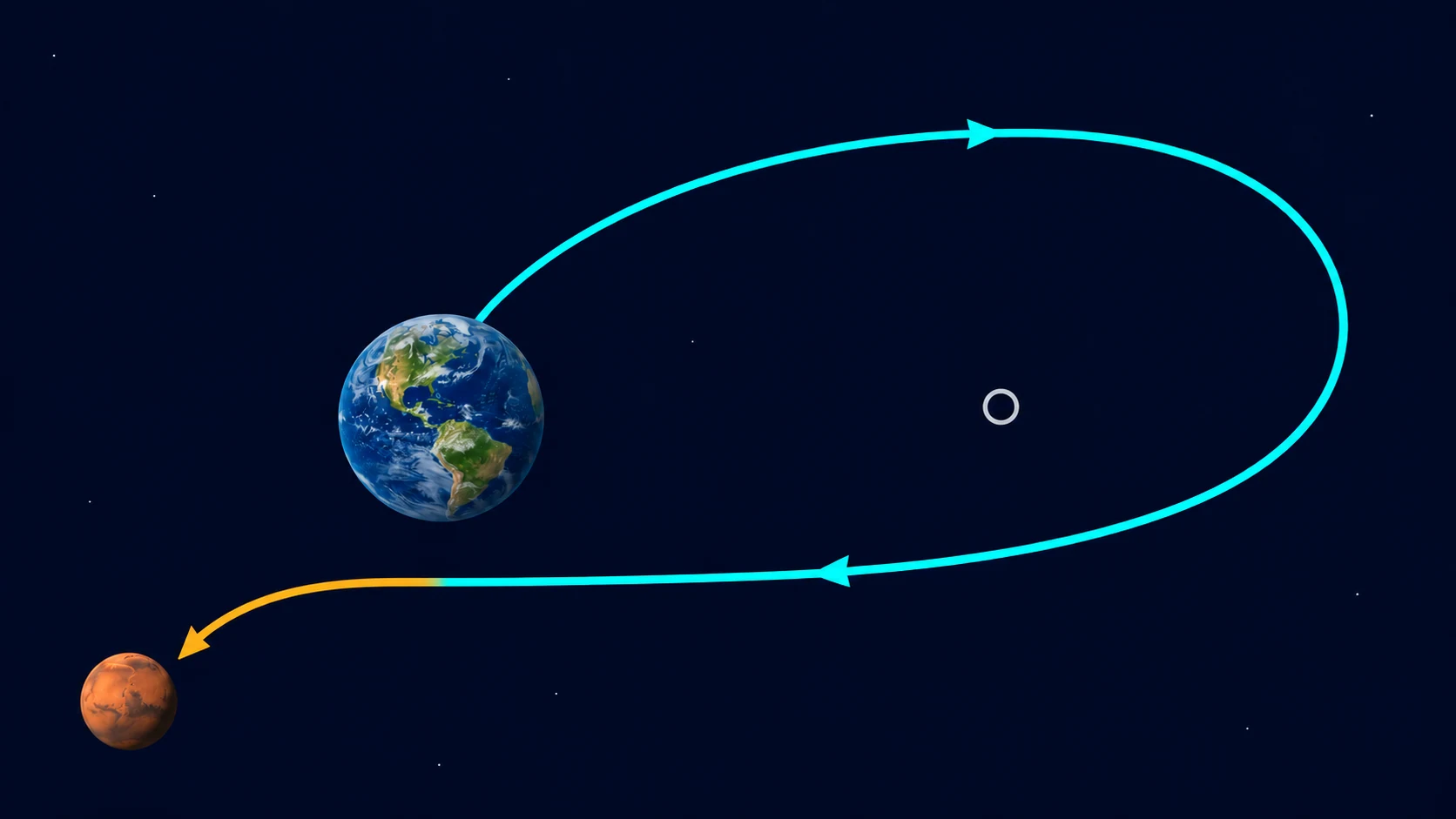
The probes launched from Cape Canaveral, Florida, at 3:55 p.m. EST on November 13, 2025. Earth and Mars were on opposite sides of the Sun, so the geometry was unfavorable for a direct transfer. The team sent the probes along a looping path near the second Sun–Earth Lagrange point, or L2, on Earth’s side facing away from the Sun. L2 is about 1.5 million kilometers from Earth, roughly four times the average Earth–Moon distance.
As Earth and Mars continued around the Sun, both spacecraft followed planned trajectories back to Earth. This loop let the team launch first and wait for the right planetary geometry before sending the probes toward Mars.
Earth turns the trajectory and the engines add speed
Earth’s gravity bends the spacecraft’s trajectory during a flyby. Viewed from the Sun, Earth itself is moving along its orbit. With the right timing and approach direction, an encounter can change both the speed and direction of a spacecraft around the Sun. Blue and Gold also used their own main engines near closest approach to supply the additional velocity needed for the transfer.
That burn is called trans-Mars injection. Each probe executed its programmed maneuver under the supervision of teams at the University of California, Berkeley, and Rocket Lab. Over the roughly ten-month cruise, the probes can fine-tune their trajectories to reach Mars at the right time and place. Each is scheduled to fire its engine to slow down and enter orbit in September 2027.
Two probes can track where changes begin
Two processes shape Mars’s magnetic environment. Some regions of the crust retain magnetism, while the solar wind interacting with ionized gas in the upper atmosphere induces another magnetic component. Energy and momentum carried by the solar wind can drive some atmospheric particles into space. ESCAPADE will measure how these interactions vary with the solar wind.
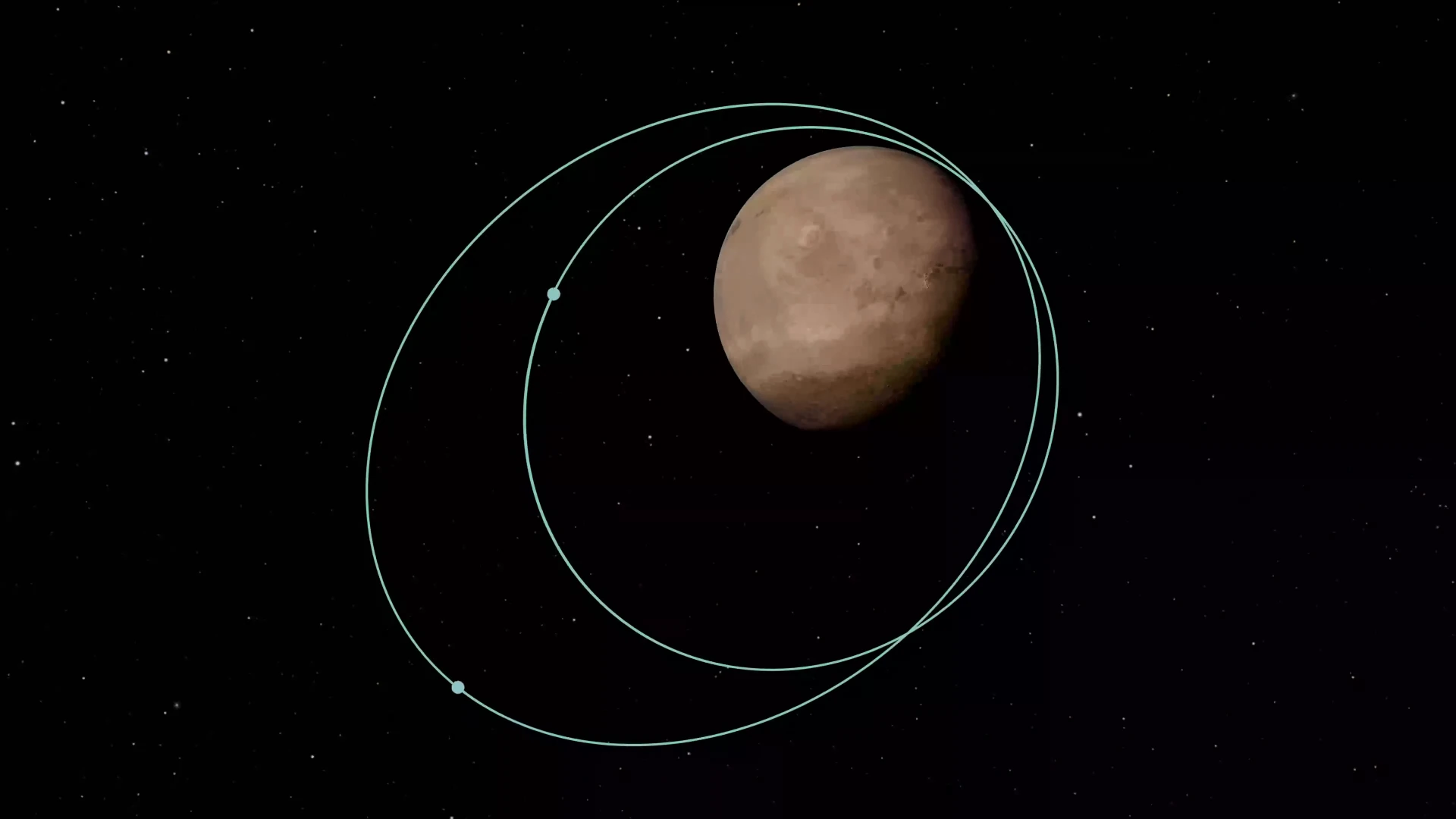
When a probe detects a change around Mars, it could be passing into a different region, or conditions could be changing over time. Blue and Gold will first follow each other in nearly the same orbit, sampling the same region a short time apart. They will then move into different orbits so one can sample the incoming solar wind while the other records what is happening close to Mars.
The probes already took measurements during several crossings of Earth’s magnetotail and can sample the solar wind between planets during the cruise. Science operations at Mars are expected to begin in mid-2028. From two vantage points, ESCAPADE will track Mars’s response to the solar wind and help researchers understand how the planet lost atmosphere over time.